
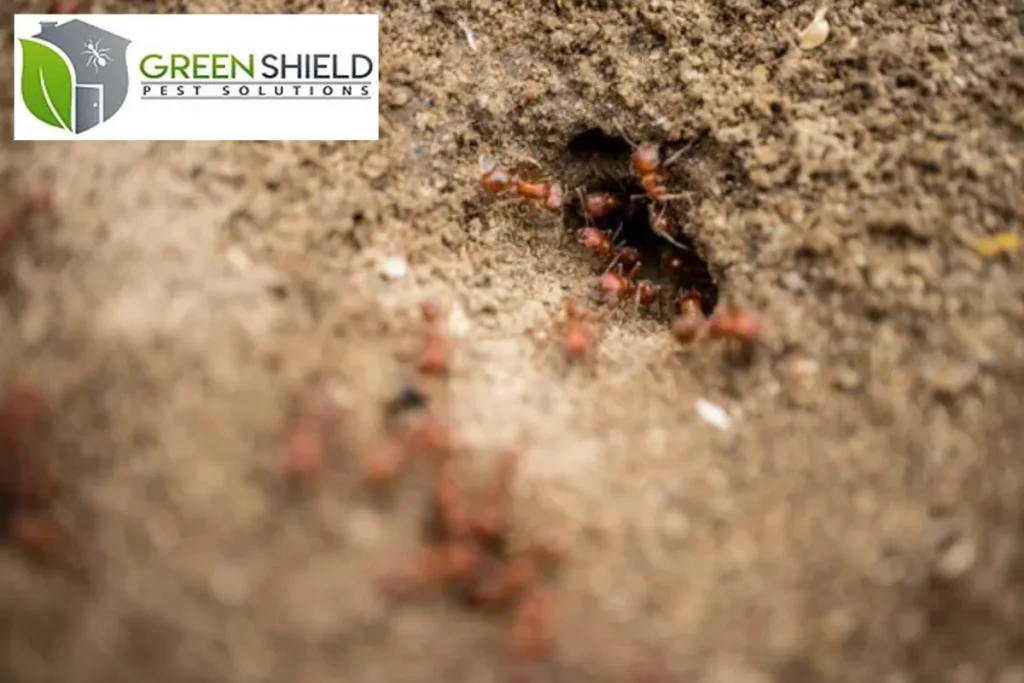
To identify ant entry points, inspect your foundation for structural gaps, plumbing penetrations, and expansion joints where the house meets the ground. Ants often follow “utility highways” like cable lines or enter through cracked mortar, weep holes, and microscopic settlement cracks. Identifying these breaches early is the first step toward effective pest control.
Mapping the “Ant Highway”: High-Risk Foundation Zones
Ants do not randomly wander into your home; they are systematic foragers that follow chemical pheromone trails through specific structural vulnerabilities. For a homeowner, understanding these zones is the difference between a temporary fix and a permanent solution. When they find a way in, they create a “scent bridge” that allows the rest of the colony to follow, often leading them directly to your kitchen or pantry.
During a recent audit for a historic property in a quiet Lewiston neighborhood, our team discovered that a seemingly minor gap in the door sill was serving as a major thoroughfare for a large colony. The foundation, while solid at a glance, was riddled with tiny access points that the foragers had exploited over time.
The Most Common External Breach Points
- Expansion Joints: The space where your driveway, patio, or sidewalk meets the foundation is a primary entry point. These gaps shift with the seasons, creating perfect conduits for insects.
- Utility Penetrations: Gaps around gas lines, HVAC conduits, and electrical wires provide a direct path inside. Often, the original sealant has cracked or fallen away.
- Weep Holes: In brick homes, these small ventilation gaps are necessary for moisture control but are often large enough for entire colonies to transit.
- Window and Door Sills: Deteriorating caulking or loose weatherstripping creates microscopic “front doors” for curious scouts.
Comparing Entry Points: Physical Gaps vs. Biological Bridges
Not every entry point is a hole in the concrete. Often, the environment around your home provides the “ramps” that allow ants to bypass the foundation entirely. Understanding the difference between a mechanical gap and a biological bridge is essential for any exterminator in Lewiston who aims for long-term results.
| Breach Type | Description | Difficulty in Detecting | Solution |
| Mechanical Gap | Cracks in the foundation, mortar, or siding | Moderate | Silicone-based caulking or mortar repair |
| Utility Gap | Spaces around pipes, wires, or vents | Easy | Expansion foam, copper mesh, or professional sealants |
| Biological Bridge | Tree branches, shrubs, or tall grass touching the wall | Moderate | Landscaping, pruning, and clearing debris |
| Subterranean Path | Ant tunnels traveling under the slab or through bath traps | Hard | Professional perimeter soil treatment |
If you are struggling with recurring infestations, a professional inspection for pest control in Lewiston, Maine, can help you determine which of these categories is the root cause of your problem.
Debunking the “Deep Foundation” Myth
A common industry myth suggests that homes built with deep concrete foundations or modern monolithic slabs are naturally “ant-proof” because insects cannot burrow through solid concrete.
The Reality: While it is true that ants cannot chew through concrete, they are masters of finding settlement cracks that are often invisible to the human eye. Furthermore, the “Bath Trap”, the cutout in a slab designed for bathtub plumbing, is often left as open soil beneath the tub. This means ants can travel under the entire width of your foundation and emerge directly into your bathroom through this hidden, internal gap. A thick foundation only provides a false sense of security; the smallest hairline fracture or a poorly sealed pipe is a functional doorway for a scout.
The Green Shield Advantage: Eco-Conscious Defense
At Green Shield Pest Solutions, we believe that protecting your home shouldn’t come at the cost of your family’s health or the environment. This is why we specialize in green, safe pesticides designed to target pests while remaining environmentally friendly.
What Makes Our Products Different?
Our proprietary approach centers on “Integrative Pest Management.” Instead of saturating your living space with harsh substances, we focus our efforts on the exterior perimeter. Our green and safe pesticides use botanical oils and advanced biological compounds that disrupt the ant’s nervous system or exoskeleton, leaving no toxic residues in your home.
By using environmentally friendly solutions, we ensure that your children and pets are safe while we establish a “Barrier-Shield” around your foundation. We don’t just kill the ants you see; we use non-repellent products that the foragers carry back to the nest, eliminating the colony at the source. This is the hallmark of high-quality pest control in Lewiston.
The 5-Minute Exterior Audit Checklist
Before you call a professional, you can perform a quick visual sweep of your home’s perimeter. This audit can help you provide valuable information to your exterminator.
- The “Finger Test”: Run your finger along the bottom edge of your siding or the rim joist. If you feel loose debris, gaps, or soft wood, it’s a sign of a potential breach.
- Inspect Utility Lines: Check every point where a pipe or wire enters the house. If you can see light through the gap or if the old putty is brittle, it needs to be resealed.
- Check the Foliage: Look for any branches or mulch piles touching the foundation. These act as bridges that allow ants to climb over the foundation and enter through the siding.
- Search for “Frass”: If you see small piles of what looks like sawdust near the foundation, you may be dealing with carpenter ants.
- Follow the Trail: If you see a line of ants, don’t reach for the spray yet. Follow them back to the source to find the exact entry point.
We recently performed this audit for a local business in Lewiston and found that a simple overgrown ivy vine was responsible for an ant trail leading straight into the second-story breakroom.
People Also Ask (FAQ)
Can ants really crawl through solid concrete?
No, they cannot chew or crawl through solid concrete. However, they can exploit the tiny expansion joints where two slabs of concrete meet or travel through microscopic settlement cracks that form as a house ages.
Is professional ant control safe for my pets?
Yes, when you choose Green Shield. We prioritize environmentally friendly methods and green and safe pesticides that are applied in a targeted manner. We focus on the exterior to keep both the pests and the products out of your living space.
Why do ants keep coming back after I spray them?
DIY sprays are usually “repellents” or “contact kills.” They kill the ants you see but cause the rest of the colony to split (a process called budding) and find new ways in. Professional pest control uses non-repellents that the ants share with the queen, ensuring the whole colony is neutralized.
What is the most common entry point for ants in Lewiston homes?
In our area, the most common entry points are door sills and the gaps around HVAC lines. The shifting soil in Maine often creates small cracks in foundation parging that ants quickly exploit.
Secure Your Foundation with Green Shield
You deserve a home that feels like a sanctuary, not a highway for pests. At Green Shield Pest Solutions, we are professional, approachable, and customer-first. We aim to be your reliable partner in protecting your property, combining our trusted expertise with friendly, responsive service.
Our customized treatment plans are built on the principles of integrity and transparency. We don’t just offer a short-term fix; we offer long-term protection through safe, eco-conscious treatments. Whether you are a homeowner with young children or a property manager who needs dependable upkeep, we have a solution tailored to your needs. Take back your home today and feel protected. Contact us for a free quote.