
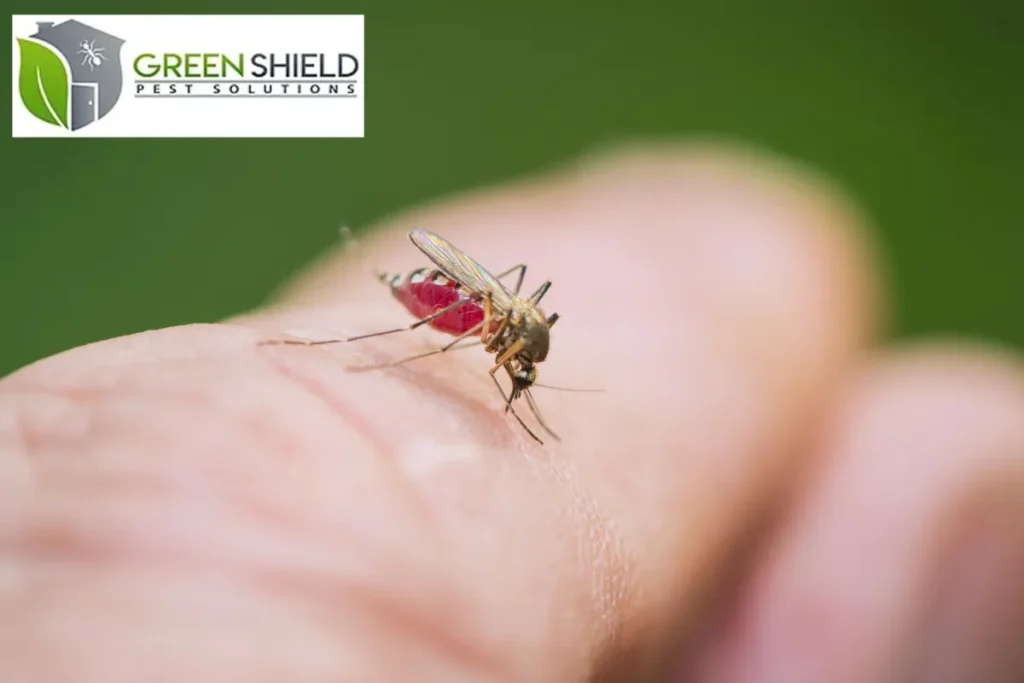
Mosquito control targets resting and breeding areas by combining larvicide treatments in standing water with residual micro-encapsulated barrier sprays on shaded underside foliage and structural overhangs. Technicians map cool, damp harborage zones where adult mosquitoes hide during hot daylight hours, eliminating active adults and disrupting egg-laying lifecycles simultaneously.
During the summer months, outdoor yards can quickly become uninviting when mosquitoes begin swarming. Many homeowners attempt to solve the problem by lighting citronella candles or using personal bug sprays. While these DIY attempts might provide brief relief while sitting on a porch, they completely miss where mosquitoes actually live, rest, and reproduce throughout the day.
Mosquitoes are fragile insects that dehydrate easily under direct sunlight. To survive daylight heat, adults seek out cool, dark, and humid shelter under wide leaf surfaces, dense brush, deck structures, and roof eaves. At the same time, female mosquitoes search for quiet, standing water to lay their egg rafts. A comprehensive pest strategy focuses on these exact harborage and water points, combining targeted leaf treatments with biological water controls to stop populations at the source.
Understanding how professional technicians map and treat these hidden micro-climates helps you make smart decisions about keeping your yard safe and comfortable. Here is a close look at how targeted residual barriers compare to general space sprays, the five diagnostic steps used during property audits, common myths about mosquito nesting, and how expert management protects your property.
Fogging Space Sprays vs. Targeted Residual Harborage Barriers
Comparing temporary open-air space spraying with a targeted residual barrier shows why focusing on resting surfaces delivers far more reliable protection.
During a recent property evaluation for a home in Freeport, our technician inspected a wooded backyard where outdoor gatherings were being ruined by biting insects. The homeowner had tried aerosol foggers, but mosquitoes returned as soon as the mist blew away in the wind. As part of our pest control in Freeport, our technician conducted a full audit, identified dense shrubbery along the property line, and applied micro-encapsulated residual barrier treatments to leaf undersides and deck joists. By treating the exact resting zones, we reduced the mosquito population by 90% while keeping outdoor areas comfortable.
Here is how open-air fogging compares to targeted residual harborage barriers:
| Control Dimension | Open Air Fogging (Space Spraying) | Targeted Residual Harborage Barriers |
| Primary Target Area | Open air columns and airborne adults | Underside foliage, deck joists, and soffit voids |
| Duration of Effectiveness | Short-lived (hours); dissipates with wind | Long-lasting (30–60 days) bonded residual layer |
| Impact on Breeding Water | Zero impact on larvae or eggs | Integrated with larvicide dunks for 100% lifecycle coverage |
| Environmental Runoff Risk | High aerosol drift; affects open areas | Low; precision targeted micro-droplets on specific resting surfaces |
| Population Elimination | Temporary knockdown of airborne adults | Permanent elimination as resting mosquitoes contact treated leaves |
The 5 Diagnostic Steps Used to Map and Treat Mosquito Resting Zones
Professional technicians follow five detailed diagnostic steps to identify where mosquitoes rest and breed on your property.
1. Shaded Foliage & Canopy Micro-Climate Mapping
Technicians inspect dense bushes, tall ornamental grasses, and low tree branches where mosquitoes rest on leaf undersides during hot daylight hours.
2. Structural Void & Deck Foundation Inspection
Inspectors check under wooden decks, porch joists, open shed overhangs, and dark soffits that offer cool, humid shelter away from wind and sun.
3. Standing Water & Larval Breeding Zone Detection
Technicians locate undrained water sources, such as clogged gutters, plant saucers, birdbaths, and French drain basins, where female mosquitoes lay egg rafts.
4. Precision Micro-Dose Harborage Application
Using specialized misting equipment, technicians treat the undersides of foliage up to 15 feet high to create a protective barrier on resting surfaces.
5. Larvicide Dunk & Biological Habitat Disruption
Biological larvicide dunks (Bacillus thuringiensis israelensis) are placed in non-drainable water features to stop larvae from maturing into flying adults.
Applying Our Green Shield Pest Solutions Protocol to Solve This
At Green Shield Pest Solutions, our brand is professional, approachable, and customer-first. We aim to be seen as a reliable partner in protecting homes and businesses, combining trusted expertise with friendly, responsive service.
We deliver exceptional seasonal yard protection by equipping our experienced technicians with top-of-the-line products and a commitment to superior service. Rather than spraying broad chemical sprays across open grass, we rely on green and safe pesticides applied directly where pests rest. Our targeted approach creates a long-lasting barrier on broad foliage and structural overhangs while protecting your family, pets, and beneficial garden insects.
Here is how our complete treatment framework protects your outdoor living space:
- Detailed Property Inspection: Our experienced technicians inspect your tree lines, garden beds, and deck structures to map exact daytime resting zones.
- Precision Barrier Treatments: Using specialized misting equipment, we apply top-of-the-line products up to 15 feet into the tree canopy and thick foliage, coating the undersides of broad leaves.
- Family and Pet-Friendly Products: We utilize green and safe pesticides that dry quickly and bind tightly to leaf surfaces, ensuring strong pest suppression with low impact on non-target species.
- Local Expertise: Working with an expert exterminator in Freeport, ME ensures your treatment plan is tailored to local coastal dampness, wooded lot layouts, and regional seasonal shifts.
While assisting a homeowner in Freeport whose wooded backyard was overrun with biting insects, our team conducted a full property audit. By delivering expert pest control in Freeport, ME services, treating dense brush along the property line, and placing biological larvicides in un-drained yard spots, we provided superior service that allowed the family to enjoy their patio all summer long.
Debunking the Myth: “Mosquitoes Nest in Trees and High Canopy Foliage”
A widespread myth among homeowners is that mosquitoes build bird-like “nests” high up in tall trees and must be sprayed from high above.
Here is why spraying high tree canopies fails:
- Mosquitoes Do Not Build Nests: Mosquitoes do not build physical nests. Females lay individual egg rafts on the surface of standing water, while adults rest in low foliage.
- Adults Rest Close to the Ground: Mosquitoes rest within 1 to 10 feet of the ground in dark, humid, wind-protected broad leaves and deck voids to stay close to potential host targets.
- High Canopy Spraying Wastes Product: Spraying high into tree canopies misses the low-lying bushes, deck joists, and standing water containers where mosquitoes actually rest and breed.
Mosquito Control Specifications & Feature Glossary
Understanding key pest management terms helps you evaluate service options and protect your yard effectively:
Harborage Zone
Cool, dark, humid micro-environments (such as leaf undersides or deck joists) where adult mosquitoes rest during daylight hours to avoid dehydration.
Larvicide Dunk (BTI)
A naturally occurring soil bacterium (Bacillus thuringiensis israelensis) that targets and kills mosquito larvae in standing water without harming fish, pets, or wildlife.
Micro-Encapsulated Residual Spray
Advanced product technology where active ingredients are encased in protective microscopic shells, allowing them to bind tightly to leaf surfaces and withstand rain.
Source Reduction
The physical removal or tipping of standing water containers to permanently eliminate egg-laying sites from a property.
People Also Ask (FAQ)
Where do mosquitoes hide on my property during the day?
Mosquitoes rest during the day in shaded, wind-protected areas close to the ground, including the undersides of broad-leaf shrubs, under deck joists, inside dense ivy, and along low tree branches.
Do mosquitoes lay eggs in soil or grass?
No. Mosquitoes require standing, stagnant water to lay eggs. While adults may rest in tall grass during hot afternoon hours, eggs must incubate directly in or above water reservoirs.
Will rain wash away a professional mosquito barrier treatment?
No. Professional treatments use micro-encapsulated formulations and binding agents that adhere tightly to the undersides of broad leaves and wooden framing once dry, staying active through rain.
When should I schedule seasonal mosquito control?
You should schedule service in late spring before daytime temperatures consistently stay above 50°F (10°C). Working with a trusted provider for pest control ensures harborage zones are treated before initial egg rafts hatch into biting adult populations.
Reclaim Your Outdoor Space with Targeted Mosquito Defense
Relying on temporary space sprays or citronella candles fails to address the hidden resting zones and stagnant water sources that fuel mosquito populations. By mapping leaf harborage areas, treating deck undersides, and deploying biological larvicides, targeted mosquito control provides long-lasting relief for your yard.
At Green Shield Pest Solutions, we believe in integrity, transparency, and customer satisfaction above all else. Our approach is built on safe, eco-conscious treatments, continuous education, and tailoring solutions to each client’s unique needs. We want you to feel confident, protected, and completely at ease, knowing your outdoor space is being cared for by experienced professionals.
Ready to eliminate mosquitoes and enjoy your yard again? Contact us today to schedule your free inspection or request a quote with Green Shield Pest Solutions!