
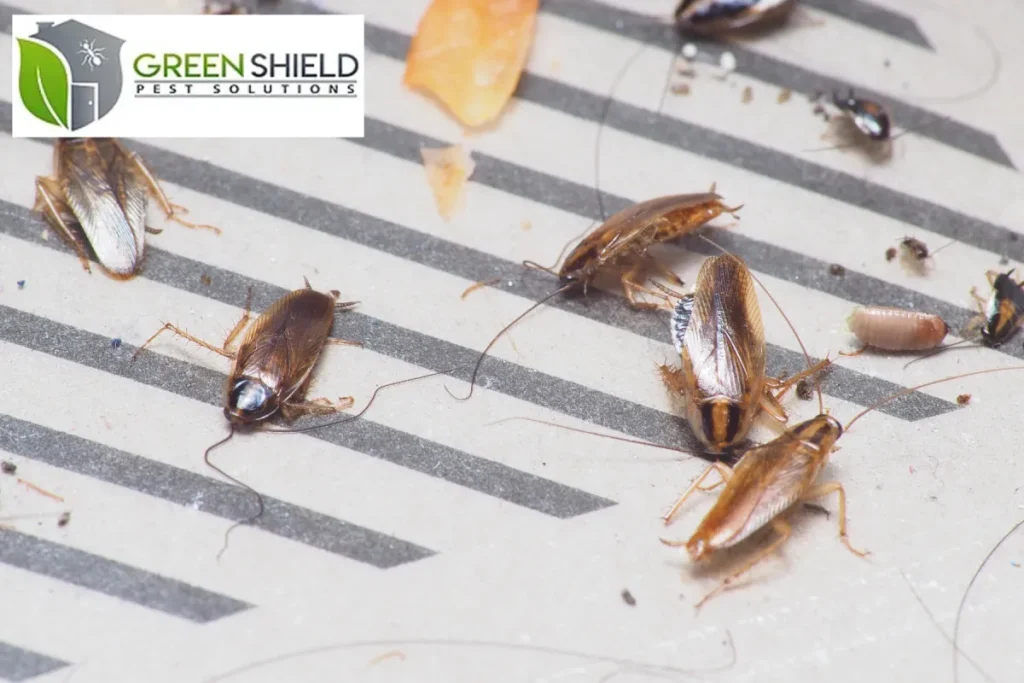
Cockroaches can build a full-blown infestation in as little as 30 to 60 days under ideal indoor conditions. A single female German cockroach carries an egg capsule holding up to 40 eggs and can produce over 300,000 offspring in a single year. Because young nymphs reach breeding maturity in just a few weeks, a small hidden problem quickly turns into a major structural invasion.
Discovering a cockroach in your kitchen or bathroom is alarming, but what you see on the surface is usually just a fraction of the actual population. These pests are nocturnal, master concealers that spend most of their lives tucked deep inside wall cavities, behind warm appliance motors, and under sinks. Because female cockroaches carry protected egg cases and reproduce exponentially, a handful of hitchhikers can turn into thousands of active insects in a remarkably short time.
Understanding the speed at which different species multiply helps property owners take swift, decisive action before populations spiral out of control. Store-bought bug sprays might kill a few crawling adults on contact, but they completely miss the protected egg capsules incubating inside structural micro-gaps. Long-term elimination requires breaking the biological breeding cycle from the inside out.
Here is a comprehensive breakdown of cockroach reproduction timelines, the five stages of exponential population growth, common industry myths, and how professional eco-conscious care keeps your home safe.
Reproduction Timelines Across Common Species
Comparing the biological timelines of common pest species demonstrates why species identification is essential for predicting population surges and choosing treatment methods.
During a recent home inspection for a client in Gardiner, our technician examined a residential kitchen where daily sightings of tiny insects were causing severe stress. A previous service had sprayed baseboards, but sightings continued to rise. Our technician conducted a thorough risk audit and confirmed that German cockroaches were nesting behind the dishwasher. By identifying the exact species, we applied precision treatments targeting their rapid 30-day breeding cycle, eliminating the colony.
Here is how reproduction metrics compare across the four most common species:
| Cockroach Species | Eggs per Ootheca | Incubation Period | Maturation Time (Nymph to Adult) | Annual Descendant Potential |
| German Cockroach | 30–40 eggs | 20–28 days | 36–60 days | 300,000+ offspring |
| American Cockroach | 14–16 eggs | 45–60 days | 150–450 days | 800+ offspring |
| Oriental Cockroach | 16 eggs | 42–80 days | 300–800 days | 200+ offspring |
| Brown-Banded Cockroach | 10–18 eggs | 40–90 days | 90–276 days | 600+ offspring |
The 5 Stages of Exponential Cockroach Population Growth
Cockroach infestations do not happen overnight; they follow five distinct biological stages as populations expand throughout a building.
1. Initial Harborage & Ootheca Deposit
A single pregnant female enters a building via cardboard boxes or plumbing chases, carrying a hard egg case (ootheca) protected against standard contact sprays.
2. Nymph Emergence & Micro-Gap Nesting
Dozens of small, translucent nymphs hatch simultaneously, immediately squeezing into narrow electrical, cabinet, and appliance gaps near food and water.
3. Rapid Molting & Instar Progression
Nymphs pass through 6 to 7 molting stages over 6 to 8 weeks, feeding on regurgitated organic matter, shed skins, and droppings hidden inside wall voids.
4. Sexual Maturation & Second-Generation Mating
Newly matured adults begin producing their own egg capsules within days of their final molt, multiplying population density exponentially across neighboring rooms.
5. Structural Overflow & Visible Daytime Swarming
Primary wall voids reach maximum capacity, forcing nymphs and weaker adults into open living spaces during daylight hours in search of food and shelter.
Applying Our Green Shield Pest Solutions Protocol to Solve This
At Green Shield Pest Solutions, our brand is professional, approachable, and customer-first. As a trusted provider of pest control in Gardiner, we strive to be a reliable partner in protecting homes and businesses by combining proven expertise with friendly, responsive service.
To halt rapid breeding cycles, our technicians begin by systematically looking for entry points along foundation gaps, utility penetrations, and cabinet voids. Once harborage zones are mapped, we utilize precision baiting strategies that turn the insects’ natural social feeding habits against the colony. To stop young nymphs from maturing into breeding adults, we deploy insect growth regulators directly into wall cavities. While traditional pesticides can cause insects to scatter, we rely on targeted methods and eco-friendly solutions, integrating green and safe pesticides that protect your family and pets while completely wiping out hidden nests.
Here is how our complete control framework stops infestations:
- Comprehensive Entry Audit: We look for entry points around pipes, baseboards, and exterior foundation lines to identify physical access paths.
- Precision Baiting & Colony Transfer: Through strategic baiting, adult foraging insects carry low-volatility active ingredients back to hidden nests, feeding non-foraging nymphs and queens.
- Hormonal Breeding Disruption: We inject insect growth regulators into wall voids, acting as biological birth control that stops nymphs from molting into breeding adults.
- Family-Safe Product Selection: We minimize chemical reliance by avoiding harsh liquid pesticides, choosing instead targeted methods and eco-friendly solutions alongside green and safe pesticides for complete peace of mind.
- Dedicated Regional Service: Partnering with an experienced team for pest control in Gardiner, ME ensures your custom treatment plan addresses regional housing designs, seasonal heating shifts, and local pest habits.
While working with a family in Gardiner whose home suffered from a sudden population surge after bringing home vintage furniture, our technicians conducted a full diagnostic audit. By delivering trusted Gardiner pest control services, placing gel baits behind kitchen cabinets, and applying birth-control regulators inside wall cavities, we stopped the breeding cycle completely without disrupting their daily household routine.
Debunking the Myth: “Seeing Only One Cockroach Means There Isn’t an Infestation Yet”
A widespread myth among homeowners is that spotting a single bug on the floor is an isolated event that can be resolved with a single spray can.
Here is why seeing one insect usually indicates a hidden population:
- Strictly Nocturnal Behavior: Cockroaches naturally avoid light. If an insect wanders into open daylight, it usually means primary wall voids are already overcrowded.
- Protected Egg Capsules: Killing one adult crawling across a counter does nothing to eliminate the egg capsules incubating behind baseboards or inside motor housings.
- Rapid Hidden Multiplication: For every single adult insect visible in open living spaces, dozens of hidden nymphs are actively molting inside adjacent wall voids.
Biological Reproduction Specifications & Feature Glossary
Understanding key biological terms helps you evaluate treatment options and take control of your property’s safety:
Ootheca (Egg Capsule)
A hard, protective protein shell produced by female cockroaches that shields dozens of developing eggs from dry air and liquid contact sprays.
Instar Stage
The developmental period of a nymph between consecutive molts as it grows larger before reaching adult sexual maturity.
Insect Growth Regulator (IGR)
A specialized compound that mimics natural insect hormones, preventing immature nymphs from maturing into reproductive adults.
Aggregation Pheromones
Chemical scent markers emitted in droppings that signal to other insects that a harborage zone is warm, moist, and safe.
People Also Ask (FAQ)
How long does it take for a cockroach egg case to hatch?
Depending on ambient room temperature and humidity, German cockroach egg cases hatch in about 20 to 28 days, while other species can take 40 to 60 days.
Do aerosol bug bombs eliminate cockroach egg cases?
No. Aerosol foggers and bug bombs cannot penetrate the hard protein shell of an egg case, nor can they reach deep inside wall voids where egg cases are deposited.
How do insect growth regulators stop an infestation?
Insect growth regulators disrupt juvenile insect hormones, preventing young nymphs from molting into breeding adults and rendering the colony sterile over time.
When should I schedule professional pest control?
You should reach out to a professional as soon as you spot an insect, droppings, or shed skins. Working with a trusted local partner for pest control ensures your property receives an in-depth diagnostic audit before minor breeding activity turns into a severe structural infestation.
Stop Cockroach Population Growth Before It Overwhelms Your Property
Waiting to address a cockroach problem allows a handful of hidden insects to multiply into thousands within a few short months. Effective, long-term control requires disrupting egg incubation and nymph development with targeted growth regulators, precision gel baits, and physical gap sealing.
At Green Shield Pest Solutions, we believe in integrity, transparency, and customer satisfaction above all else. Our approach is built on safe, eco-conscious treatments, continuous education, and tailoring solutions to each client’s unique needs. We want you to feel confident, protected, and completely at ease, knowing your pest concerns are being handled by caring professionals.
Ready to interrupt the breeding cycle and protect your home for good? Contact us today to schedule your free inspection or request a quote with Green Shield Pest Solutions!