
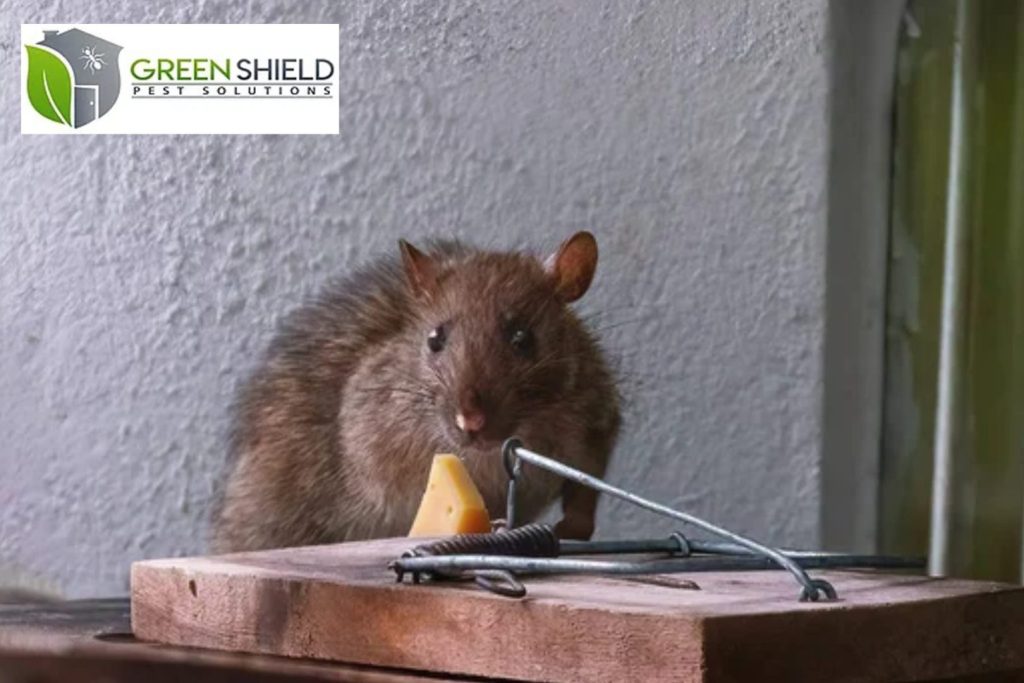
To distinguish species, look at location and shape: Norway rats are burrowers that enter through foundations and leave large, blunt-ended droppings. Roof rats are climbers that enter through eaves or rooflines, leaving smaller, pointed droppings. Identifying these specific entry points is crucial for effective exclusion and long-term rodent control.
Identifying the Species by Physical Evidence
When you hear the scuttling of feet in the middle of the night, your first instinct is likely to call a rat exterminator. However, a professional approach begins with forensic identification. Identifying whether you are dealing with a Norway rat or a Roof rat is the difference between setting a trap on the floor or sealing a hole thirty feet in the air.
In the industry, we look for “biological signatures.” During a recent audit for a homeowner in the Sunnyside neighborhood, we found heavy grease marks along the ceiling joists but no activity near the floor. This immediately told us we were dealing with Roof rats, which dictated a completely different strategy than if we had found burrows in the backyard.
Comparison of Droppings and Damage Marks
| Feature | Norway Rat (Brown Rat) | Roof Rat (Black Rat) |
| Dropping Shape | Large (19mm), capsule-shaped, blunt ends | Medium (13mm), spindle-shaped, pointed ends |
| Gnaw Marks | Large, jagged holes near floor level | Small, precise holes in high-altitude wood |
| Rub Marks | Dark, greasy smears along baseboards | Greasy trails along rafters and roof peaks |
| Nesting Site | Ground burrows, crawlspaces, basements | Attics, soffits, and upper-story wall voids |
Common Entry Points: High vs. Low
The “verticality” of the damage is the biggest giveaway for species identification. If you are seeking pest control, you need a team that understands the architectural vulnerabilities of local homes.
Norway Rat Entry Zones (The Low Road)
Norway rats are the heavyweights of the rodent world. They are not great climbers, but they are world-class diggers and gnawers. They often target:
- Foundation Gaps: They use their powerful claws to widen cracks in concrete or brick, often entering through the basement or crawlspace.
- Floor Drains: Being excellent swimmers, they frequently enter through damaged sewer lines.
- Garage Door Thresholds: If you see that the rubber sweep at the bottom of your garage door has been chewed at the corners, you likely have a Norway rat issue.
Roof Rat Entry Zones (The High Road)
Roof rats are the acrobats. They prefer to stay high up to avoid predators such as cats and dogs. Their entry points include:
- Eave Gaps: They exploit “construction gaps” at the roofline where the roofline meets the fascia board.
- Vent Screens: They easily chew through plastic attic vents to reach the warmth of your insulation.
- Utility Lines: They use power lines or overhanging tree branches as bridges to reach your chimney or roof peaks.
Debunking the “Color Code” Myth
A common industry misconception, and one we frequently encounter while providing Lewiston pest control, is that you can identify these rats solely by their fur color. People assume all “brown” rats are Norway rats and all “black” rats are Roof rats.
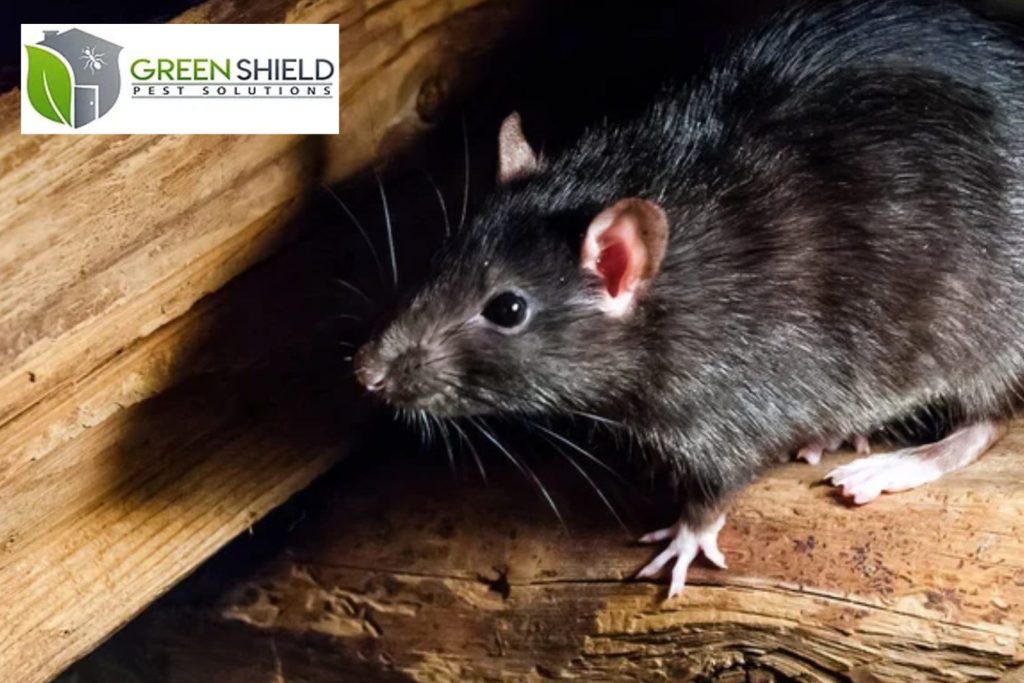
The Reality: Fur color is an unreliable metric. A Roof rat can appear light brown, and a Norway rat can appear nearly black, depending on its age, diet, and environment. Instead, professionals look at morphology. A Norway rat has a blunt nose, small ears, and a tail shorter than its body. A Roof rat has a pointed nose, large ears that can reach its eyes when folded forward, and a tail that is longer than its body. If you see a tail dragging behind a rat like a long whip, it’s almost certainly a Roof rat.
Our Proprietary Advanced Management Strategies
At Green Shield Pest Solutions, we don’t believe in a one-size-fits-all approach. Whether you need pest control in Lewiston, Maine, for a historic downtown building or a modern suburban home, we use a two-pronged proprietary system to ensure total eradication and prevention.
1. External Baiting and Trapping
Our external baiting and trapping protocol is the first line of defense. We place tamper-resistant stations around the exterior perimeter of your property. These are specifically designed to reduce the “buffer population” living in the landscape. By intercepting rats before they even touch your foundation or roofline, we significantly lower the pressure on your home’s defenses. This is especially vital in the Fairways area, where nearby wooded lots can harbor high rodent populations.
2. Internal Baiting and Trapping
Once the exterior is secured, we move to internal baiting and trapping. This is a surgical process. We don’t just scatter traps; we place them based on the UV urine trails and rub marks identified during our audit. By using “active” internal trapping, we remove rodents currently nesting inside your walls or attic without risking their deaths in inaccessible areas.
Applying our Biometric Barrier Audit to Solve This
When you choose G Shield for pest control in Lewiston, you receive our Biometric Barrier Audit. This is a deep-dive diagnostic into your home’s “envelope.” We look for:
- Species-Specific Stress Testing: We check the “bite-force” marks on entry points. Norway rats leave wider tooth grooves than the more refined Roof rat.
- Ultraviolet Path Mapping: Rats are incontinent; they leave a trail of urine everywhere they go. We use high-intensity UV lights to see these glowing trails, which show us exactly which pipes or beams they are using as highways.
- Structural Vulnerability Analysis: We assess whether your home’s architecture, such as overhanging eaves or unsealed crawlspace vents, is inviting a specific species.
People Also Ask (FAQ)
Why do I have rats in my attic but not my basement?
This is a classic sign of Roof rats. They prefer high-altitude nesting sites. If you see droppings in the attic but your pantry remains untouched, you are likely dealing with a climber that forages outside and uses your attic only for warmth.
How small a hole can a rat fit through?
A rat can fit through any opening the size of its head. For an adult rat, that is about the size of a quarter (roughly 1 inch). For a juvenile, it can be as small as a pencil.
Are the baits safe for my pets?
We prioritize the safety of your family and pets. Our bait stations are Tier 1 tamper-resistant, meaning they are locked and designed to keep children and dogs out. Furthermore, we use eco-conscious products that minimize the risk of secondary poisoning.
Your Partner in Protection
Green Shield Pest Solutions is professional, approachable, and customer-first. We aim to be seen as a reliable partner in protecting homes and businesses in the community, combining trusted expertise with friendly, responsive service. We believe in integrity, transparency, and customer satisfaction above all else.
Our approach is built on safe, eco-conscious treatments and tailoring solutions to each client’s needs. Whether you’re a property manager dealing with a recurring issue or a homeowner concerned about the safety of your kids and pets, we want you to feel confident, protected, and at ease. Choosing us should give you peace of mind, knowing your concerns are being handled by professionals who care.
Don’t let a small gnaw mark turn into a major infestation.
- Contact us for a free estimate today
- Reach out for a preventive service plan to keep your home pest-free year-round.
- Call us to speak with an experienced member of our team about your specific needs.
We stand out through our personalized service and advanced management strategies. Let us show you why we are the trusted name for long-term protection.