
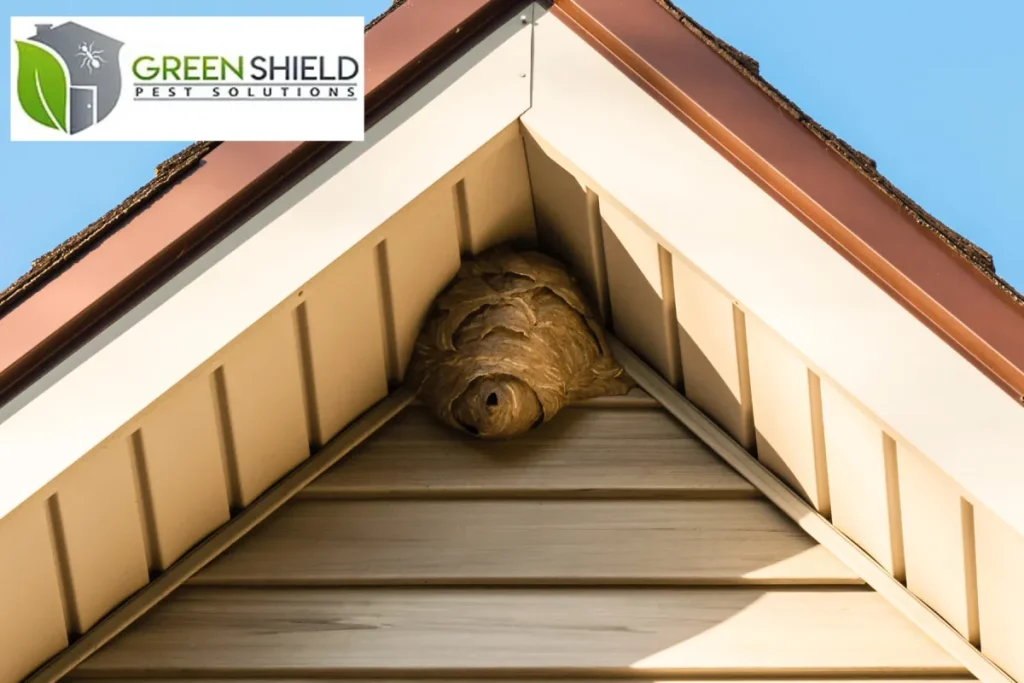
Yellow jacket nests are completely enclosed, spherical paper structures with a single entry hole, typically hidden underground or inside wall voids. In contrast, paper wasp nests are open, uncovered, umbrella-shaped combs with fully exposed internal cells that hang visibly from eaves, decks, and porch ceilings. Learning how to identify stinging pests by their nest structure helps you manage the specific threat level safely before attempting any property clearance.
Discovering stinging insects around your yard can quickly cause a lot of unwanted stress. When flying insects establish a home near your doorways, patios, or walkways, understanding the species you are dealing with is essential for your safety. Property owners frequently encounter challenges when managing a bee and wasp population without knowing if the colony poses an immediate danger. Treating an active nest requires clear observation because different stinging pests possess widely contrasting levels of territorial aggression.
Every summer, homeowners make the mistake of misidentifying a highly volatile colony for a minor, docile one. Approaching an enclosed nest under the assumption that it belongs to a non-aggressive species can trigger a massive defensive swarming event. To safeguard your property and your loved ones, you must focus closely on the architectural design of the nest itself. Evaluating the differences between yellow jacket nests vs. paper wasp nests is the definitive turning point in choosing an accurate, non-destructive remediation plan.
Comparing Nest Structures: Core Visual Differences
Evaluating the external design of a stinging insect home is the most reliable way to accurately diagnose your risk level. Some species utilize a multi-layered paper casing that completely locks down their breeding cells from view. Other species build basic, uncovered combs where you can see the developing larvae from the ground. Identifying these differences prevents you from taking unnecessary risks with a mature colony.
| Structural Feature | Yellow Jacket Nest | Paper Wasp Nest |
| Enclosure Type | Completely enclosed with a thick, paper-like envelope | Completely open; no protective paper shell or outer wall |
| General Shape | Spherical, football-shaped, or irregular chunk-like shapes | Flat, single-layer comb shaped like an upside-down umbrella |
| Primary Locations | Underground burrows, wall voids, attics, and hollow logs | Roof eaves, window frames, porch ceilings, and deck railings |
| Colony Capacity | Massive (ranging from 1,000 to over 5,000 insects) | Small (typically containing only 20 to 100 insects) |
| Nest Material Appearance | Mottled gray or brown paper made from chewed wood fibers | Light gray to tan paper with a distinctly visible hexagonal comb |
Recognizing these layout factors keeps you from making critical structural mistakes. While a flat, single-layer umbrella comb can be managed easily with minimal risk, a hidden spherical structure containing thousands of aggressive workers demands professional intervention. Residents seeking trusted Georgetown pest control options should prioritize structural identification before deciding on a removal method.
Structural Identifiers: A Step-by-Step Inspection Guide
Safely identifying a stinging colony requires keeping a careful distance and tracking their entry zones. During a recent structural property check for a client in Georgetown, our team traced an active population by mapping their flight paths, saving the homeowner from an unexpected sting event. Many families moving into new developments around the neighborhood experience these seasonal pest pressures when workers begin foraging. Follow this step-by-step sequence to evaluate any nest on your property safely:
- Locate the Main Entry Point: Watch the flight patterns from a safe distance to see if the insects disappear into a single, small opening in a wall or the ground, or if they gather openly on an exposed comb.
- Examine the Outer Envelope: Check for a protective paper shell. Open hexagonal cells mean you are dealing with paper wasps, while a smooth, gray paper wall indicates a yellow jacket or hornet nest.
- Observe Flight and Traffic Patterns: Count the traffic flow over a few minutes. Enclosed nests show a continuous, high-speed stream of workers flying in and out, while open-comb structures feature slow, infrequent movement.
- Identify the Attachment Point: Look at how the nest secures to your home. Paper wasps suspend their combs from a single woody stalk, whereas aerial yellow jacket nests fuse broadly against a flat structural surface.
Applying this inspection guide helps you gather accurate details without disturbing the colony. If you find a hidden entry point along your foundation or siding where traffic is continuous, you are likely dealing with a subterranean or wall-void yellow jacket population. In these scenarios, calling an experienced exterminator in Georgetown is the safest way to handle the threat before the insects chew through your interior drywall.
Debunking the Myth: “Yellow Jackets Only Build Nests Underground”
A widespread and hazardous misunderstanding across the property maintenance sector is that yellow jackets only nest in ground burrows. Many property owners assume that any paper nest found hanging from a roofline or an attic eave must belong to relatively calm paper wasps. This assumption can lead to severe stinging incidents if a homeowner attempts a do-it-yourself removal on an aerial yellow jacket colony.
The Reality: This misunderstanding stems from a failure to identify stinging pests by their nest structure accurately. While certain species prefer underground soil cavities, wide common varieties frequently construct large aerial structures or invade structural wall voids and attics. Aerial yellow jacket nests retain their signature thick, multi-layered paper envelope and contain thousands of highly aggressive defenders. Treating a hanging structure without checking for a protective outer shell can expose your family to an immediate defensive attack from a massive colony.
Applying our Green Shield Pest Solutions Framework to Solve This
Rather than running random, broad-spectrum treatments that cause defensive swarms, our framework treats structural stinging threats with targeted precision. At Green Shield Pest Solutions, we avoid using heavy traditional methods that leave harsh odors or residues around your living spaces. Instead, we implement a detailed, strategic approach that prioritizes structural safety, family health, and lasting environmental peace of mind.
Our proven treatment process begins with a careful evaluation of your home’s exterior to map out the exact species and nesting zones. We choose to use green and safe pesticides that are tough on stinging pests but carefully selected to protect your children, pets, and the surrounding environment. Our technicians undergo ongoing education to stay ahead of industry standards, ensuring that every application is handled safely and effectively.
For structural infestations hidden inside wall voids or attics, we use advanced tools to inject dust treatments directly into the core of the colony. This process neutralizes the hidden nest without requiring us to tear down your drywall prematurely. This targeted method keeps the insects from panicking and chewing their way inward into your living spaces.
To prevent future queens from reclaiming the same space next season, we establish a comprehensive power-spray barrier along common exterior entry points, providing your home with a reliable, long-lasting shield. If you are experiencing recurring pest challenges, reaching out for professional Georgetown pest removal ensures your home remains completely secure.
People Also Ask
Stinging pests create a lot of questions regarding safety and property protection. Having accurate information ensures you handle active nests without putting your household at risk. Here are the common questions our field teams answer for property owners in Georgetown:
Are paper wasps as aggressive as yellow jackets?
No, paper wasps are generally docile and will rarely attack unless their physical comb is directly touched or threatened. Yellow jackets are highly territorial, notoriously aggressive, and will swarm in large numbers if you walk near their main entry hole or disturb the ground nearby.
Should I plug a yellow jacket entry hole in my wall with caulk?
No, you should never seal an active yellow jacket entry hole while the colony is still inside. If you block their exit, they will grow desperate and use their powerful jaws to chew through your interior drywall, flooding directly into your living room.
Can a paper wasp nest survive through a freezing winter?
No, the active colony dies off completely during the first hard freeze of winter. Only newly mated queens survive by hibernating in warm bark or wall cracks, and they will never reuse the old, abandoned paper structure the following spring.
Conclusion & Next Steps
Choosing the correct treatment strategy requires comparing yellow jacket nests vs. paper wasp nests to identify the exact threat level built on your property. Misidentifying a massive yellow jacket colony as a small paper wasp nest can lead to dangerous swarming incidents and unexpected interior drywall damage. During a recent yard assessment for a home in Georgetown, our team successfully identified a hidden yellow jacket colony inside an old tree stump before the lawn was mowed, preventing a severe defensive swarm.
As a professional and reliable pest control company, Green Shield Pest Solutions is committed to providing effective, tailored solutions for each customer. Our core belief is delivering high-quality, eco-friendly treatments that keep your property pest-free while minimizing environmental impact. We stand out by offering personalized, hands-on care specifically customized to your unique needs, giving you total confidence and reassurance.
Protect Your Home Today
Do not let an active nesting colony jeopardize your family’s safety or comfort this season. Contact us today to request your free consultation or a personalized quote.