
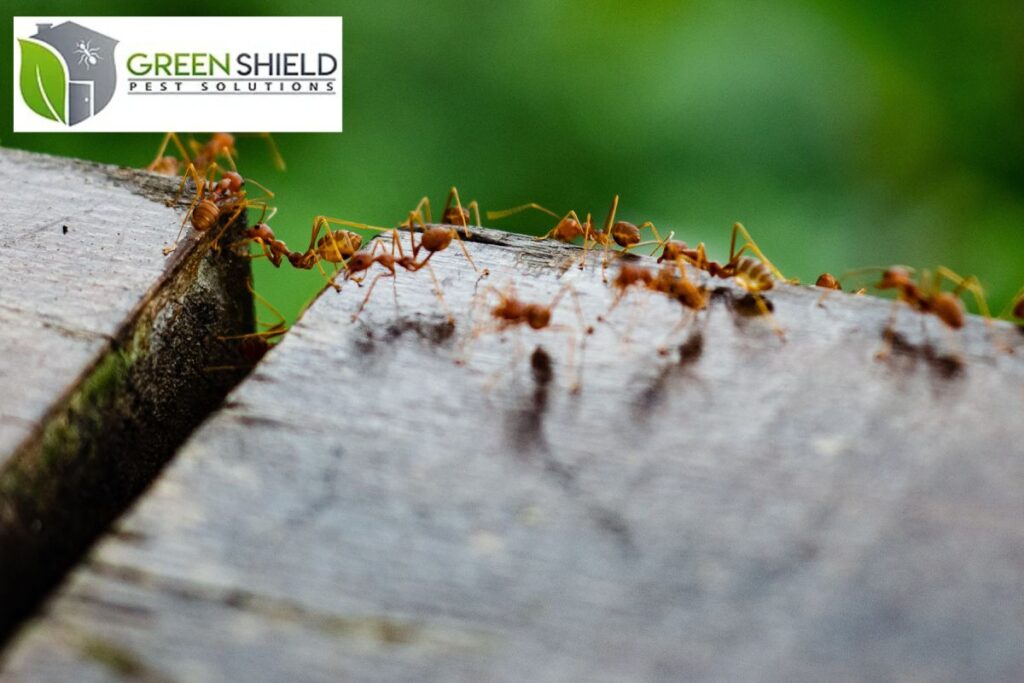
Professional ant control helps locate hidden colonies by tracing ant trails, inspecting nesting areas, and checking entry points behind cabinets, baseboards, and walls. A technician uses these clues to determine whether ants are nesting indoors or entering from outside, then recommends treatment based on the ant species and the conditions attracting them.
Why Do Ant Colonies Hide Behind Cabinets and Baseboards?
Ants enter homes in search of food, water, and shelter. Some build nests outdoors and come inside to find food, while others may nest in protected spaces within a building. Gaps behind cabinets, openings around plumbing, and cracks along baseboards can provide sheltered routes that are difficult to inspect.
You might notice ants crossing a kitchen counter without knowing where they came from. Their trail could lead behind a cabinet, toward a damp area under the sink, or through a small gap between the wall and floor. Finding that route helps narrow down the source of the activity.
What Makes Cabinets and Baseboards Attractive to Ants?
Several conditions can draw ants to these areas:
- Food residue: Crumbs, grease, sugary spills, and food scraps provide a reason to return.
- Moisture: Leaking pipes, damp cabinet floors, and condensation can provide water.
- Sheltered spaces: Gaps behind cabinets and beneath baseboards offer protected places to hide or travel.
- Entry points: Openings around pipes, windows, doors, and exterior walls can provide access indoors.
- Nearby nesting areas: Ants may use these spaces to travel between a nest and a food source.
Finding ants behind a cabinet does not automatically mean their colony is there. They may be following a route from an outdoor nest, so the location and pattern of activity matter.
What Signs May Point to a Hidden Ant Colony?
Certain signs can help homeowners identify areas that need a closer look.
| Sign | What it may indicate |
| Ants follow the same path repeatedly | A regular route between a nest and a food or water source |
| Ants emerge from a baseboard gap | A possible entry point or travel route |
| Ants gather around pipes beneath a sink | Access to moisture or a nearby opening |
| Ants return after surfaces are cleaned | An unresolved food source, entry point, or nest |
| Sawdust-like debris appears near wood | Possible carpenter ant activity that needs further inspection |
These signs are clues, not proof of a nest’s exact location. A technician can examine the surrounding area to determine what may be causing the activity.
How Do Professional Ant Control Technicians Find Hidden Colonies?
A professional inspection focuses on where ants travel, where they enter, and what may be attracting them. This helps the technician choose a suitable treatment instead of addressing only the insects visible on a counter or floor.
Step 1: Trace Ant Trails Back to Their Source
Ants often follow regular routes between their nest and food or water. A technician observes where they gather, which direction they travel, and whether the trail leads toward a cabinet seam, baseboard gap, or plumbing opening.
For example, a line of ants on a kitchen counter may follow the edge toward the back of a cabinet. The trail could lead to a small opening near a pipe or a gap between the cabinet and wall.
Following these routes helps narrow down possible entry points. Since ants can change paths when food sources or conditions change, a technician providing pest control in Yarmouth may need to inspect more than one area.
Step 2: Inspect Cabinets, Baseboards, and Nearby Structures
After identifying a recurring trail, the technician checks nearby spaces for openings, moisture, and other signs of activity.
Common inspection areas include:
- Cabinet corners, joints, and gaps behind cabinets
- Spaces between baseboards and flooring
- Openings around sink pipes and other plumbing
- Cracks near doors, windows, and exterior walls
- Damp wood or areas with signs of water damage
- Wall gaps and other spaces where insects may travel out of sight
The inspection should focus on areas supported by evidence. Removing cabinets or opening walls is not always necessary. If further access is needed, the technician can explain why before recommending the next step.
Step 3: Identify the Ant Species
Different ant species have different nesting habits and food preferences, so identification helps guide treatment.
Some species build nests outdoors and enter homes to forage. Others may establish nests in protected spaces inside a building. Carpenter ants, for example, may nest in damp or damaged wood, although seeing them indoors does not automatically mean the main colony is inside the home.
Green Shield Pest Solutions identifies carpenter ants, odorous house ants, and pavement ants among the types commonly encountered in Southern Maine. Recognizing the species helps a technician assess its likely nesting habits and choose an appropriate approach.
Step 4: Determine Whether the Nest Is Indoors or Outdoors
The technician also considers whether the insects are nesting inside the building or entering from an outdoor colony.
| Inspection clue | Possible indoor nesting | Possible outdoor nesting |
| Ants emerge from an interior gap | May indicate a nearby nest or hidden route | Could be an entry point from outside |
| Trails lead toward an exterior wall | Ants may be traveling through a wall space | Ants may be moving in from outdoors |
| Activity appears near damp wood | May indicate a suitable indoor nesting area | Moisture may also attract ants outside |
| Ants enter through an exterior crack | Could provide access to an indoor nest | May be a route used to reach food indoors |
No single sign confirms where a colony is located. The technician considers the overall pattern of activity, the building’s condition, and possible food or moisture sources before recommending treatment.
How Does Professional Ant Control Address Hidden Colonies?
Once the likely source of activity has been identified, the technician can recommend a plan suited to the species and nesting conditions. Depending on the situation, this may involve targeted treatment, bait where appropriate, attention to entry points, and steps to reduce food and moisture sources.
Match the Treatment to the Ant Species and Nesting Location
Treatment methods should reflect the inspection findings. Bait, for example, uses an attractive food-based product that ants may carry back to other members of the colony. Its success depends on factors such as the species, whether the ants accept the bait, and correct placement.
Other methods may be more suitable for different species or locations. A technician can explain the recommended approach and whether follow-up visits may be needed. Some infestations take more than one visit to assess and manage, especially when nesting areas are difficult to reach.
Why Treating Visible Ants May Not Be Enough
Removing insects from a countertop can make the problem look resolved, but it may not address the source. If a colony remains active or insects can still enter through the same opening, more may appear later.
Cleaning is still important because it removes food residue and makes the area less attractive to foraging insects. However, cleaning alone may not resolve a hidden nest.
A complete plan considers the likely nesting area, entry points, food and water sources, suitable treatment methods, and the need for follow-up. This helps homeowners understand why activity continues and what needs to change.
Applying Our Green and Safe Pesticides to Address Hidden Ant Colonies
Green Shield Pest Solutions uses the phrase “green and safe pesticides” to describe its focus on eco-conscious treatment choices. The company’s ant control page states that it applies treatment using these products to help manage ant activity around homes and businesses.
This approach means choosing products suited to the pest problem and applying them with care. It does not mean every pesticide is completely harmless or that precautions are unnecessary. Products must be used according to their label directions, and homeowners should receive clear instructions about any steps needed before, during, or after treatment.
Inspect First and Choose the Right Treatment
When insects appear behind cabinets or along baseboards, identifying the likely source helps guide the response. A technician can follow recurring trails, inspect gaps, and check for moisture or other conditions that may support activity.
The goal is to choose a treatment based on the inspection findings rather than assume every infestation has the same cause. If insects are entering from outside, the plan may differ from one used for a colony nesting inside a wall or another protected space.
Explain Application and Safety Precautions
Treatment should suit the identified species and the conditions found during inspection. Green Shield Pest Solutions emphasizes a customer-first approach, with clear guidance to help homeowners understand what to expect.
Technicians should explain relevant precautions involving children, pets, food, and treated areas. Homeowners should follow product label directions and ask when areas can be used again or whether cleaning is needed.
Reduce the Conditions That Attract Ants
Treatment is only one part of managing recurring activity. Homeowners can also help by:
- Wiping up crumbs, grease, and spills promptly
- Storing food in sealed containers
- Cleaning around appliances and cabinet edges
- Repairing leaking pipes and addressing damp areas
- Sealing suitable gaps around plumbing and trim
- Removing unnecessary debris near the foundation
- Following recommended monitoring or follow-up steps
For a home in Yarmouth, these steps can be useful when activity repeatedly appears around kitchens, plumbing, or exterior entry points. The right prevention measures depend on what the inspection reveals about the property.
Common Myth: If the Visible Ants Are Gone, the Colony Is Gone
The myth: Once you stop seeing ants, the infestation has been eliminated.
The reality: The insects you see may be foragers from a larger colony. They may be traveling through a wall gap, looking for food, or entering from an outdoor nest. Removing visible insects does not always resolve the source.
For example, wiping a counter can remove a trail and food residue, but activity may return if another food source remains or the same entry point is still open. A hidden colony may continue sending out workers.
Instead of judging success by one ant-free day, watch for repeated activity. If the same area continues to attract insects, a professional inspection can help determine whether an unresolved nest, entry route, or other condition needs attention.
What Should Homeowners Do Instead?
If activity continues:
- Note where the insects appear and whether they follow a regular trail.
- Remove accessible food and water sources.
- Clean affected surfaces without disturbing a suspected nest unnecessarily.
- Check for visible gaps or leaks near the activity.
- Arrange an inspection if the problem persists, or you notice signs of possible carpenter ant activity.
These steps can help narrow down the problem, but they may not replace professional treatment when a colony is nesting in a concealed area.
When Should You Call a Professional for Hidden Ant Colonies?
Occasional insects may enter a home while searching for food, but repeated sightings can point to an ongoing problem. Consider professional help when:
- Activity keeps appearing behind the same cabinets or along the same baseboards.
- Insects return soon after you clean and remove food sources.
- You see them emerging from cracks or spaces you cannot inspect.
- You notice sawdust-like debris or other possible signs of carpenter ants.
- Activity spreads to several rooms or continues despite basic prevention steps.
If you need pest control in Yarmouth, ME, a professional inspection can help identify likely entry points, nesting conditions, and suitable treatment options. Green Shield Pest Solutions can explain its findings and recommend an approach based on the conditions at your property.
Homeowners considering Yarmouth pest control can ask what the inspection covers, which treatment methods may be used, what precautions are needed, and whether follow-up service is recommended. Clear answers make it easier to understand the process before treatment begins.
People Also Ask
Can ants build nests behind kitchen cabinets?
Yes. Some species may nest in protected spaces behind cabinets or within wall voids. Others use these areas as travel routes from an outdoor nest. An inspection can help determine which possibility is more likely.
How do professionals find ant nests inside walls?
Technicians look for recurring trails, gaps, moisture sources, and other signs of activity around walls and baseboards. These clues help narrow down likely nesting areas, although the exact nest may not always be directly accessible.
Why do ants keep coming back after treatment?
Activity may continue if a colony remains active, an entry point is still open, or food and moisture continue to attract insects. The species, treatment method, and conditions around the property can all affect the outcome. A follow-up inspection may be needed.
Should I remove my baseboards to get rid of ants?
Not automatically. Technicians may be able to assess activity through visible trails, accessible gaps, and other inspection clues. Removing baseboards or opening walls should depend on the evidence and whether additional access is needed.
Can professional ant control eliminate a hidden colony?
Professional treatment can help locate likely nesting areas and select methods suited to the species and infestation. Results depend on factors such as nest location, treatment suitability, and whether the conditions attracting insects are also addressed.
How can I keep ants from coming back behind cabinets?
Store food in sealed containers, clean up spills and crumbs, repair leaks, and seal suitable gaps around plumbing and trim. If activity continues despite these steps, a professional inspection can help identify an unresolved nest or entry route.
Conclusion: Find the Source of the Ant Problem
Ants behind cabinets and baseboards can be frustrating because the place where you see them may not be where they are nesting. Professional inspection helps trace recurring trails, check likely hiding places, identify the species, and assess whether the activity is coming from inside or outside the home.
Green Shield Pest Solutions offers ant control in Southern Maine, focusing on careful treatment selection and clear communication. If ants keep appearing in the same areas, a professional inspection can help identify possible entry points and nesting areas.
Contact us today to request a free quote or schedule an inspection. You can also ask about preventive service options to help manage recurring pest concerns.